

[gspeech type=full]
A Personal Reflection on the Cost of Escaping Reality.
It often starts quietly. A few minutes to unwind after work. Just a short break before tackling the next thing. That was how it began for me—just a game to ease the stress. But I didn’t notice how easily “a few minutes” turned into hours, and how hours quietly rearranged the priorities of my life.
We live in a world where escape has become normal. The screen welcomes you with no judgment. It offers goals, rewards, structure—everything that real life sometimes seems to lack. I understand why people play. I really do. When reality hurts, when you’re drowning in bills, loneliness, heartbreak, or just the dull weight of existing, a game can seem like a rescue.
But I’ve come to see what it really is, when taken too far: a trap disguised as comfort.
I remember evenings when my responsibilities sat like unopened letters on the table. I’d stare into the screen, heart racing with digital achievements, while my real life silently slipped into disrepair. I missed calls. I avoided conversations. I grew short-tempered. I saw the same in others—colleagues, friends, even parents—numb behind their devices, while their children played the same game in the next room. The irony struck me: we scold kids for their screen time, yet we model the behavior ourselves.
Make no mistake—this isn’t just about entertainment. It’s addiction. No different, really, than alcohol or drugs. It gives you the illusion of control, while actually stealing it. You convince yourself you’re fine. That it’s your one harmless habit. That you deserve it. That it’s better than doing nothing. But soon, your world narrows. You stop growing. You stop connecting. You stop living.
The most tragic part? The systems that profit from this. Multibillion-dollar corporations designing games not to bring joy, but to keep you hooked. They study your patterns. They exploit your weaknesses. They don’t see a human being on the other end of the screen—they see a data point, a credit card, a statistic in a growth report. And we reward them for it. With our time. With our money. With our attention.
And the children—God, the children. They’re watching us. They imitate us. They learn what “normal” looks like from us. When we escape instead of cope, we teach them the same. When we numb instead of heal, they follow.
I’m not writing this as a preacher. I fell. Hard. It happened during a dark time when everything seemed to fall apart at once. Work stress, personal loss, isolation. I turned to games the way others turn to pills. And like any addict, I lied to myself. I wasn’t hurting anyone. I was “just relaxing.” But I was disappearing. Slowly.
So how do we get out?
Not through shame. Not through self-hatred. But through honest love for ourselves and others.
Start by admitting the truth. Speak it aloud.
Set time limits—and stick to them. Replace game time with real connection: walking, calling someone, writing, learning.
Tell a friend what you’re doing. Ask for help.
And most of all—remember who you are when the screen is off.
You are not a character. You are not a username. You are not your win streak or your level.
You are a human being. You are loved. You are needed. And you are capable of facing the world—not running from it.
To anyone out there who feels the pull of the screen too often, too deeply—I see you. I’ve been there. I still fight it. But I want more for you. You deserve more.
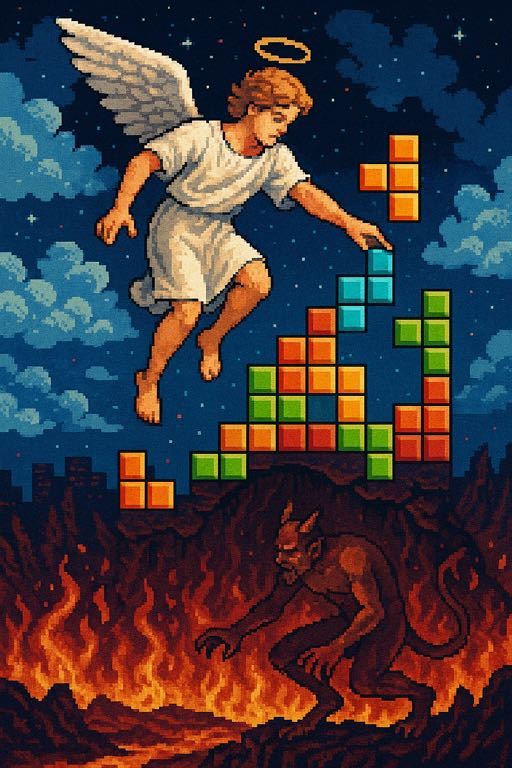
Please don’t let life slip by in pixels.
Come back. We need you here. The real world is messy and painful—but it’s also beautiful, and it’s real.
And you are real, too.

Author: Vlad Shapran
My life is a story about continuous education, which makes a person's life meaningful and useful.

‘Wow’ is the word for this work, Vlad. What can I say? It works like a perfect dose of azithromycin for me as I, myself, have been suffering from the typhoid of playing games online like slaying monsters and leveling up my weapons and so on – pure insanity I know. We game addicts seem to embrace more joy even leveling up the CRIT DMG than embracing the joy of being with our children, spending precious time with them…reading a hardcopy story book together. You presented our shortcomings so powerfully that at least now I will think twice before opening my gaming device. Thank you for this insightful work.